12th Century Cambodian Artifacts

12th Century Cambodian Artifacts

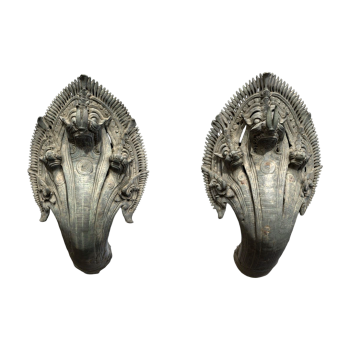
This pair of works is "The Snake God (Naga) Decorative Top", created in the 12th century AD (Angkor Wat period). This artwork is from Cambodia and is made of bronze. The overall size is 29.2 x 15.2 x 15.2cm (about 11 1/2 x 6 x 6 inches). It is currently in the Cleveland Museum of Art.
12th Century Cambodian Cultural Relics Portable Statues of Sakyamuni Buddha

12th Century Cambodian Cultural Relics Portable Statues of Sakyamuni Buddha

This work is a portable icon of Shakyamuni Buddha, with a gesture of touch-the-ground seal. The creation time is about from the late 1100 to the early 1200 s. It comes from Cambodia and belongs to the artworks of the seventh generation of jayavarma (Jayavarman VII). The material is bronze and measures 42 x 18.5 x 3cm (about 16 9/16 x 7 5/16 x 1 3/16 inches), which is in the Cleveland Museum of Art.
Eighteenth-century European porcelain greyhound fights bulldog

Eighteenth-century European porcelain greyhound fights bulldog

The porcelain work shows a scene of a greyhound and a bulldog fighting each other, reflecting the attention and love of Meissen's workshop to animal themes in 18th century Europe. Meissen porcelain is known for its high quality and fine details, and this work is likely to be used to decorate aristocratic homes or display collected art. It uses sophisticated sculptural techniques and overglaze painting techniques to demonstrate the artist's keen observation of animal dynamics and detail.
Eighteenth Century European Porcelain Imitation Twelve Horned Porcelain Bowl

Eighteenth Century European Porcelain Imitation Twelve Horned Porcelain Bowl

This porcelain was made in Meissen, Germany, between 1730 and 1734. Meissen Porcelain Workshop is inspired by oriental porcelain, especially Chinese and Japanese styles. This work is modeled after the traditional Japanese twelve-horn bowl. It uses exquisite underglaze blue, overglaze and gold decoration, which is a good example of early European porcelain making process.
eighteenth-century european porcelain imitation twelve-horn bowl

eighteenth-century european porcelain imitation twelve-horn bowl

This porcelain was made in Meissen, Germany, between 1730 and 1734. Meissen Porcelain Workshop is inspired by oriental porcelain, especially Chinese and Japanese styles. This work is modeled after the traditional Japanese twelve-horn bowl. It uses exquisite underglaze blue, overglaze and gold decoration, which is a good example of early European porcelain making process.
Ming Dynasty Cultural Relics Orchid Pavilion Blue and White Porcelain Bowl
Ming Dynasty Cultural Relics Orchid Pavilion Blue and White Porcelain Bowl

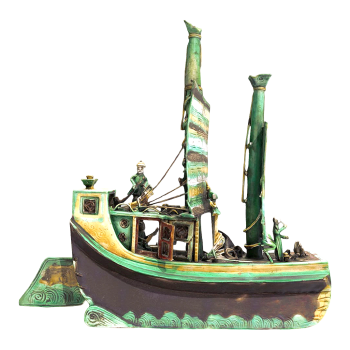
A Cargo Ship Loading Jingdezhen Porcelain in Qianlong Period of Qing Dynasty

A Cargo Ship Loading Jingdezhen Porcelain in Qianlong Period of Qing Dynasty

On-glaze painted pot of Jingde carp, a cultural relic of the Qianlong period

On-glaze painted pot of Jingde carp, a cultural relic of the Qianlong period

Eighteenth Century Qing Dynasty Relics Lioness and Cub Jingde overglazed porcelain
Eighteenth Century Qing Dynasty Relics Lioness and Cub Jingde overglazed porcelain

This artwork is from Jingdezhen, China, and was made between 1700 and 1720. This is a porcelain statue, its special feature is the use of "glazed" decoration technology, painted on the unglazed body (also known as "green color").
Eighteenth Century European Porcelain Blue and White Porcelain Cover Jar

Eighteenth Century European Porcelain Blue and White Porcelain Cover Jar

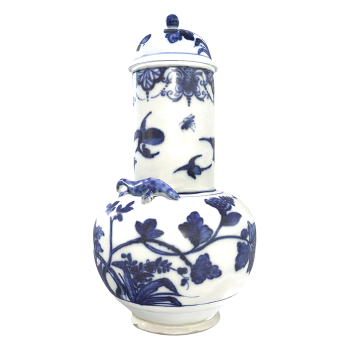
This work of art is a blue and white porcelain covered pot (Deckelvase), which was made by the German Meissen Porcelain Factory (Meissen) and was completed between 1725 and 1726. It is a piece of porcelain as the material of art, its decoration using the underglaze blue (Unterglasurblau) technique. The special feature of this covered jar is that it has a lizard decoration attached to its shape, which adds a unique beauty of the combination of nature and art.
Eighteenth Century European Porcelain Golden Lion Soup Bowl Porcelain

Eighteenth Century European Porcelain Golden Lion Soup Bowl Porcelain

This mason porcelain bowl is made in imitation of a chinese design. The Mason Porcelain Factory began to imitate Chinese porcelain in the early 18th century to cater to the European market's fondness for oriental art. This porcelain soup bowl with a lid is decorated with a yellow lion pattern and uses superb porcelain craftsmanship. This decorative style combines European baroque art and oriental decorative elements, reflecting the artistic achievements of Meissen porcelain factory at that time.
Eighteenth Century European Porcelain Blue and White Porcelain Box with Lid

Eighteenth Century European Porcelain Blue and White Porcelain Box with Lid

The blue and white porcelain box with lid is a piece of exquisite porcelain made by the German Meissen Porcelain Factory (Meissen), created in about 1730. This work is a porcelain box with a lid, and its design is inspired by Japanese art style, reflecting the European imitation of East Asian art at that time.
12th Century Cambodian Cultural Relics Buddha Tempted by Magic Ro

12th Century Cambodian Cultural Relics Buddha Tempted by Magic Ro

This work is called "Buddha Tempted by Magic Luo". It was created in Cambodia from the end of the 12th century to the beginning of the 13th century. It belongs to the reign of Jayavarma VII. It is a bronze sculpture with overall dimensions of 42 x 18.5 x 3cm and top section of 22 x 17 x 3cm, currently in the collection of the Cleveland Museum of Art. This sculpture depicts the Buddha under the Bodhi tree to resist the temptation of the magic Luo scene. The Buddha is surrounded by a ring of burning gems and blossoms of lotus petals, symbolizing enlightenment and divine radiance. The right hand points to the ground and makes a gesture of "touching the ground", symbolizing the call to the earth.
12th Century Cambodian Heritage Buddha Tempted by Moreau Tower Top Ornament

12th Century Cambodian Heritage Buddha Tempted by Moreau Tower Top Ornament

This work is called "Buddha Tempted by Magic Luo". It was created in Cambodia from the end of the 12th century to the beginning of the 13th century. It belongs to the reign of Jayavarma VII. It is a bronze sculpture with overall dimensions of 42 x 18.5 x 3cm and top section of 22 x 17 x 3cm, currently in the collection of the Cleveland Museum of Art. This sculpture depicts the Buddha under the Bodhi tree to resist the temptation of the magic Luo scene. The Buddha is surrounded by a ring of burning gems and blossoms of lotus petals, symbolizing enlightenment and divine radiance. The right hand points to the ground and makes a gesture of "touching the ground", symbolizing the call to the earth.
18th Century European Porcelain Taoist Theme Bowl

18th Century European Porcelain Taoist Theme Bowl

This mason porcelain bowl is made in imitation of a chinese design. The Mason Porcelain Factory began to imitate Chinese porcelain in the early 18th century to cater to the European market's fondness for oriental art.
Eighteenth Century European Porcelain Porcelain Bowl

Eighteenth Century European Porcelain Porcelain Bowl

This mason porcelain bowl is made in imitation of a chinese design. The Mason Porcelain Factory began to imitate Chinese porcelain in the early 18th century to cater to the European market's fondness for oriental art.
Ancient Greek Pottery Kraut

Ancient Greek Pottery Kraut

A Krater is a large pottery from ancient Greece, often used to mix wine and water. A kraut with a red patterned column refers to a column with a red pattern painted on the pottery. This pottery was made in the Camarina (Camarina) region of Sicily between about the 5th century BC and the 4th century BC. This Klatt style of decoration is known as the Red-figure style, which was very popular in ancient Greek pottery. The red painting style is characterized by the use of red paint to draw patterns on a black background, making the patterns more vivid and detailed.
Kakadu Parrot of Mason Porcelain

Kakadu Parrot of Mason Porcelain

John Joachim Candler (Johann Joachim Kaendler) was one of the most famous porcelain sculptors of the first half of the 18th century, who designed many exquisite porcelain works for the Mason Porcelain Factory. Kakadu parrot is one of his masterpieces. This porcelain sculpture shows a lifelike Kakadu parrot sitting on a tree stump decorated with flowers and leaves. The sculpture uses multi-color painting technology to make the parrot's feathers and details on the stump more vivid. Mason Porcelain Factory was one of the first manufacturers of hard porcelain in Europe, founded in 1710.
18th Century European Porcelain Ceramic Guanyin Statues

18th Century European Porcelain Ceramic Guanyin Statues

This ceramic Guanyin statue was made by Johann Gregorius Höroldt, a German painter and porcelain painter. Holdert is known for his Chinese style decoration (Chinoiserie) designs.
18th Century European Porcelain Guanyin Statues

18th Century European Porcelain Guanyin Statues

This Guanyin image is one of the early works of the Mason Porcelain Factory and is based on a Chinese prototype. The porcelain was made by Johann Gregorius Höroldt, a German painter and porcelain painter. Holdert is known for his Chinese style decoration (Chinoiserie) designs.
Eighteenth Century European Porcelain Mason Porcelain Blue and White Porcelain Vase

Eighteenth Century European Porcelain Mason Porcelain Blue and White Porcelain Vase

This vase is one of the representative works of Mason porcelain. Mason Porcelain Factory was one of the first manufacturers of hard porcelain in Europe, founded in Germany in 1710. This vase was made between 1722 and 1723 and was decorated with blue and white. Blue and white decoration is a method of drawing a pattern with blue pigment on porcelain and then firing it under the glaze.
18th Century European Porcelain Chinese Style Fine Neck Vase

18th Century European Porcelain Chinese Style Fine Neck Vase

This thin-necked vase of Mason porcelain was made by Mason porcelain factory in 1721. Mason Porcelain Factory is one of the earliest hard porcelain factories in Europe, established in 1710. Mason porcelain is famous for its exquisite craftsmanship and unique design, especially its blue and white underglaze decoration. The porcelain was made by Johann Gregorius Höroldt, a German painter and porcelain painter. Holdert is known for his Chinese style decoration (Chinoiserie) designs.
Qing Dynasty Yongzheng Cultural Relics Hollow Golden Overglaze Color Porcelain Bowl

Qing Dynasty Yongzheng Cultural Relics Hollow Golden Overglaze Color Porcelain Bowl

This porcelain is an antique from the Yongzheng period of the Qing Dynasty (1723-1735) and was produced in Jingdezhen. Yongzheng period porcelain is famous for its exquisite craftsmanship and unique aesthetic style. Yongzheng period porcelain glaze color variety, including pastel, enamel, fighting color and so on. Enamel porcelain has been greatly developed in the Yongzheng period and has become a work of art integrating poetry, calligraphy, painting and printing.
Eighteenth Century European Porcelain Chinese Style Decorated Gold Plated Cup

Eighteenth Century European Porcelain Chinese Style Decorated Gold Plated Cup

The porcelain was made by Johann Gregorius Höroldt, a German painter and porcelain painter. Holdert is known for his Chinese style decoration (Chinoiserie) designs. Holdert's work includes many pieces of porcelain with Chinese decorations, such as a tea set and chocolate service made in 1725 for Victor Amadeus II, King of Sardinia. These decorative styles reflect the romanticized fantasy of the East in Europe in the 18th century.